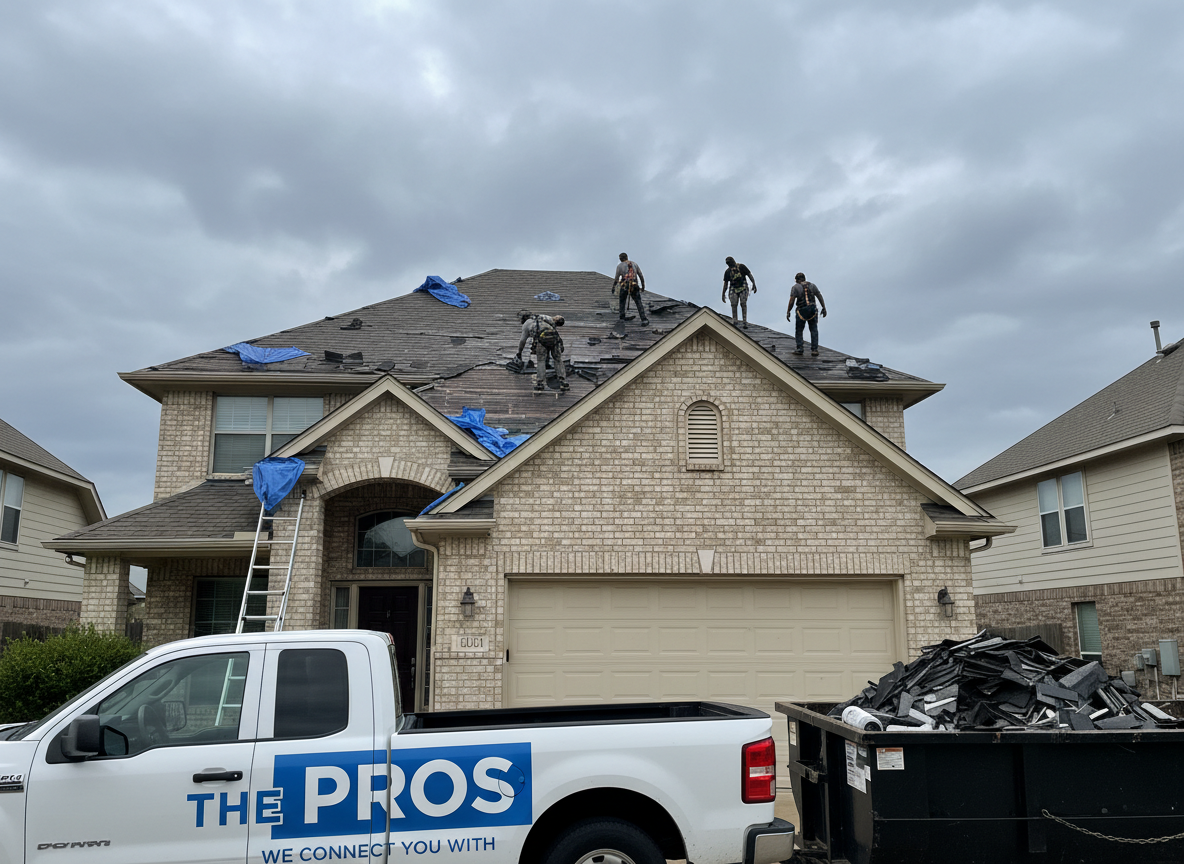
Cedar Park sits in Williamson County under a humid subtropical climate that brings intense summer thunderstorms with high winds, hail and driving rain. These events frequently damage composition shingle roofs on homes in established neighborhoods such as Twin Creeks and Brushy Creek, where many houses date from the 1990s and early 2000s. Wind can lift shingles along ridges and eaves while hail dents the surface, allowing water to reach the underlayment. The pros we connect you with assess both visible impact and hidden moisture migration that often travels down valleys toward the Cedar Park Public Library area before surfacing inside attics.
Repair work here must account for the local terrain and soil conditions that affect drainage around homes near the Brushy Creek Regional Trail. Saturated clay soils can cause minor foundation shifts that stress roof planes, especially on two-story homes common in Cedar Park Town Center. Matching existing shingles and underlayment is critical because older products may no longer be manufactured; the connected pros source compatible materials rated for the same wind zones used in Austin and Round Rock building standards. Edge cases include granule loss that accelerates heat gain during hot summers and small punctures near plumbing vents that go unnoticed until the next storm.
Temporary protection comes first when active leaks threaten interiors. The connected pros install reinforced tarps secured to withstand follow-up weather, then document all damage for insurance adjusters familiar with Williamson County claims. Permanent repairs focus on replacing only affected sections while preserving sound roofing, avoiding full replacement unless widespread granule loss or widespread underlayment saturation exists. Homeowners in Leander and Round Rock who delay inspection often face larger interior repairs because moisture travels along rafters before appearing as ceiling stains.
Final walkthroughs verify that flashing around chimneys and skylights remains intact and that new materials blend with the original roof plane visible from H-E-B Center at Cedar Park. This approach keeps repairs targeted and preserves the roof's remaining service life in the local climate.
Technician insight
In Cedar Park, the thing that catches most people out with Storm Damage Roof Repair is how wind-driven rain from summer storms follows the grain of older shingles on 1990s homes in Twin Creeks and Brushy Creek, soaking underlayment along the north-facing slopes that rarely dry out in our humid climate before the next system arrives from Austin.
Wind Uplift After Thunderstorm
A homeowner in Brushy Creek noticed attic moisture after high winds. The connected pros found lifted shingles along the ridge and saturated felt near a valley. They replaced the affected course, added new drip edge and confirmed no further migration toward the interior. The roof stayed dry through the remaining summer storms.
How it works
- 1
Initial Assessment
The connected pros inspect the roof from the ground and attic, noting wind uplift, hail dents and water intrusion points typical after Williamson County storms.
- 2
Temporary Protection
Reinforced tarps are secured over damaged sections to stop active leaks while permanent repairs are scheduled.
- 3
Material Matching and Repair
Damaged shingles, underlayment and flashing are replaced with compatible products suited to Cedar Park's humid summers and wind exposure.
- 4
Final Inspection
The repaired areas are checked for proper sealing and drainage, confirming no ongoing issues near valleys or eaves.
Pricing
Costs vary by extent of damage, roof pitch and material availability; the connected pros provide upfront quotes based on the specific storm impact.